
- info@rahulkulkarni.in
- 1307/1308, Centrum Business Square, Road No 16, Wagale Estate, Thane (W)
SIP Investment Basics
01
Guide
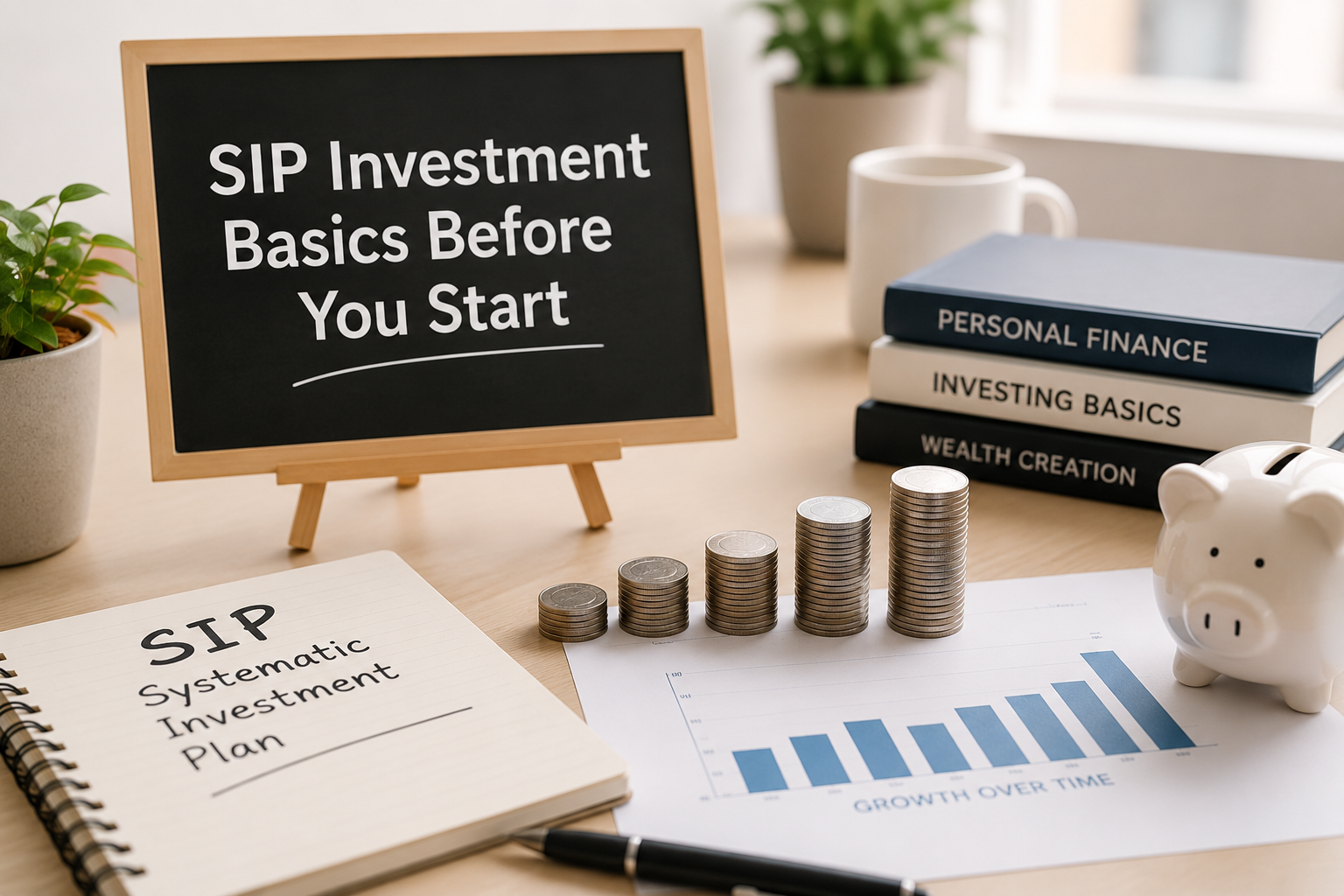
SIP Investment Basics Before You Start
A systematic investment plan, or SIP, is a method of investing a fixed amount at regular intervals in a mutual fund scheme. It helps you build the habit of investing, avoid waiting endlessly for the perfect market level and spread your investment across different market conditions. However, a SIP is not a separate product and it does not remove market risk.
Before you start a SIP, it is important to know what you are investing for, how long you can stay invested, how much fluctuation you can handle and whether the selected mutual fund category is suitable for your goal. At SIP Bharat, SIP discussions begin with planning first and product selection later.
1. Know what a SIP can and cannot do
A SIP can bring discipline, convenience and consistency to your investing journey. It can also support rupee-cost averaging because your fixed amount buys more units when prices are lower and fewer units when prices are higher. But it cannot guarantee returns, prevent losses or make an unsuitable scheme suitable. The underlying mutual fund still decides the level of risk.
2. Start with a clear financial goal
Your SIP should be connected to a purpose such as retirement, child education, a home purchase, wealth creation or another long-term objective. A goal gives context to the investment amount, time horizon, asset allocation and review frequency. Without a goal, investors often judge the SIP only by short-term returns, which can lead to poor decisions during volatile markets.
3. Match the time horizon with the fund category
Money needed in the near future should usually be treated differently from money meant for a long-term goal. Equity-oriented mutual funds may be considered for longer horizons where the investor can tolerate volatility, while shorter goals may need more conservative choices. The right category depends on the goal, liquidity need, risk profile and overall portfolio.
4. Choose a SIP amount you can continue
A good SIP amount is one that fits your monthly cash flow after essential expenses, emergency savings, insurance needs and existing commitments. Starting too aggressively may look attractive on a calculator, but it can become difficult to continue when expenses rise. A sustainable SIP that is reviewed and increased gradually can be more practical than an amount chosen under pressure.
5. Understand your risk profile first
Risk profiling is not just a formality. It helps you understand how much market movement you can emotionally and financially accept. Two investors may choose different SIP strategies for the same goal because their income stability, liabilities, age, investment experience and comfort with volatility are different.
6. Check costs, tax and liquidity
Before investing, read the scheme objective, riskometer, asset allocation pattern, expense ratio, exit load and taxation details. Also check whether your money may be needed before the recommended holding period. SIPs are flexible, but mutual fund redemptions can still have tax and exit-load implications depending on the scheme and holding period.
7. Review the SIP, but avoid frequent reactions
A SIP should be reviewed periodically to confirm whether it still matches your goal, income, risk comfort and portfolio allocation. Review is also useful when your life situation changes. Short-term market movement alone should not become the only reason to stop or switch a long-term SIP.
Before you begin
Keep an emergency fund, maintain adequate insurance protection, define your goal and understand the mutual fund scheme before starting. This article is for investor education only and should not be treated as personalised investment advice. Mutual fund investments are subject to market risks. Please read all scheme-related documents carefully before investing.


Frequently Asked Questions
Is a SIP a guaranteed-return product?
No. A SIP is only a method of investing regularly in mutual funds. Mutual fund returns are market-linked and can fluctuate.
Ask SIP BharatHow should I choose my SIP amount?
Start with cash flow, goals, emergency liquidity and risk comfort. The amount should be sustainable rather than chosen only for an expected future value.
Review SuitabilityDiscuss Your Financial Goals