
- info@rahulkulkarni.in
- 1307/1308, Centrum Business Square, Road No 16, Wagale Estate, Thane (W)
Review Your Portfolio
01
Guide
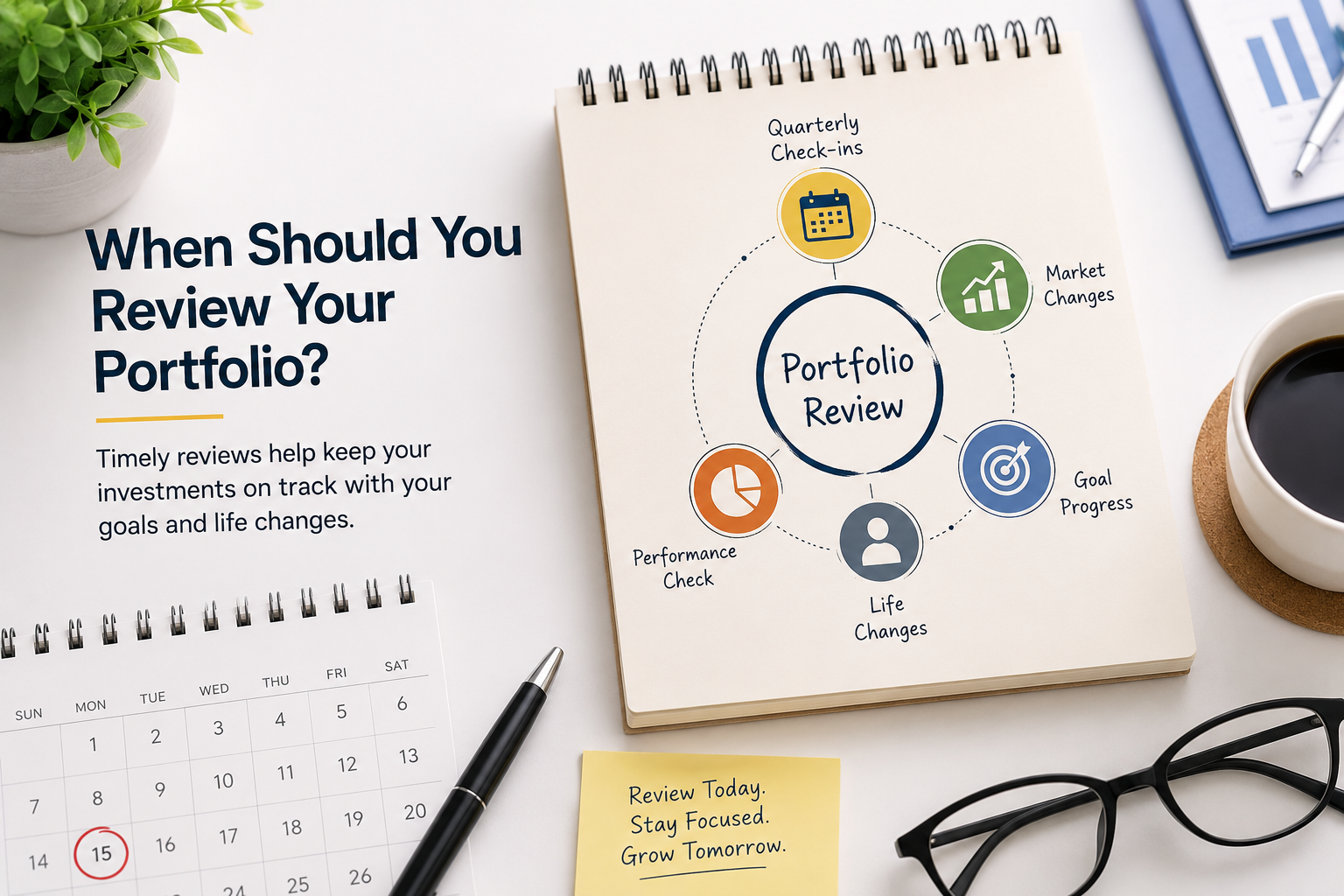
When Should You Review Your Portfolio?
Investing is not a one-time activity. Even a well-planned portfolio needs regular review to ensure it continues to match your financial goals, risk tolerance, and changing life circumstances. Market movements, income changes, new responsibilities, and shifts in financial priorities can gradually make your portfolio different from what you originally intended.
A portfolio review helps you identify whether your current investments are still suitable, whether your asset allocation has changed, and whether adjustments are required to keep your long-term financial plan on track.
Why Portfolio Reviews Matter
Over time, different investments perform differently. Equity investments may rise faster than debt investments during strong markets, while defensive assets may perform better during periods of volatility.
As a result, the balance of your portfolio can gradually change.
For example, you may originally decide to maintain:
- 60% Equity
- 30% Debt
- 10% Other Assets
After a strong equity market rally, your portfolio might shift to 75% equity and only 20% debt. This means you may now be taking more risk than originally planned.
A periodic portfolio review helps restore the right balance.
How Often Should You Review Your Portfolio?
For most long-term investors, reviewing the portfolio every 6 to 12 months is generally sufficient.
Checking investments too frequently may lead to unnecessary decisions based on short-term market movements. On the other hand, ignoring your portfolio for several years can result in investments becoming misaligned with your goals.
A structured review once or twice a year allows you to evaluate performance without reacting emotionally to everyday market fluctuations.
Review Your Portfolio When Your Financial Goals Change
Your investment strategy should always be connected to your financial goals.
If your goals change, your portfolio may also need to change.
Common goals include:
- Buying a home
- Funding children's education
- Planning a wedding
- Starting a business
- Building a retirement corpus
- Creating emergency savings
- Generating retirement income
For example, if a financial goal that was originally ten years away is now only two years away, reducing exposure to highly volatile investments may be appropriate.
Review Your Portfolio After Major Life Events
Life changes often have a direct impact on your finances.
You should consider reviewing your portfolio after events such as:
- Marriage
- Birth of a child
- Purchasing a home
- Job change
- Significant increase in income
- Starting a business
- Retirement
- Receiving an inheritance
These events can change your expenses, responsibilities, financial goals, and ability to take investment risk.
Review Your Portfolio When Your Risk Tolerance Changes
Your ability and willingness to take investment risk may change over time.
A young investor with a long investment horizon may be comfortable holding a higher percentage of equity investments. However, as retirement approaches, capital preservation and stable income may become more important.
A portfolio review helps determine whether your current investments still match your risk profile.
Final Thoughts
A portfolio should evolve as your life, income, goals, and financial responsibilities change.
For most investors, reviewing investments every six to twelve months—and whenever a major financial or personal change occurs—can help maintain the right balance between growth and risk.
The objective of a portfolio review is not to constantly replace investments. Instead, it is to ensure that every investment continues to serve a clear purpose within your broader financial plan.
With regular monitoring, disciplined asset allocation, and goal-based investment planning, you can keep your portfolio aligned with your financial journey and work confidently toward long-term wealth creation.


Frequently Asked Questions
Is a SIP a guaranteed-return product?
No. A SIP is only a method of investing regularly in mutual funds. Mutual fund returns are market-linked and can fluctuate.
Ask SIP BharatHow should I choose my SIP amount?
Start with cash flow, goals, emergency liquidity and risk comfort. The amount should be sustainable rather than chosen only for an expected future value.
Review SuitabilityDiscuss Your Financial Goals